New Wings Ministries
Charity & outreach · United Kingdom
newwings.org.uk
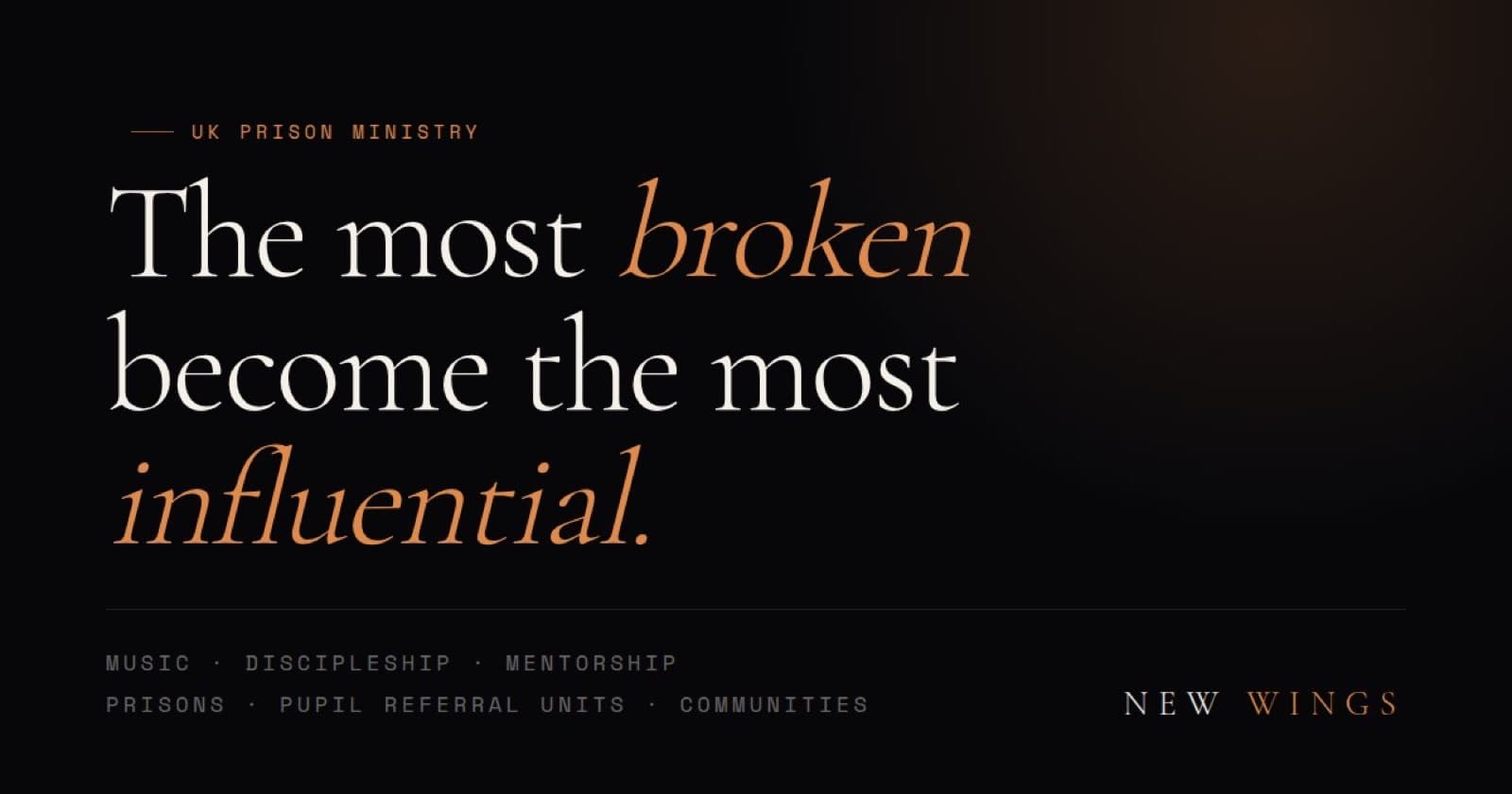
The brief
A charity site has to speak to several audiences who want completely different things from the same page. A prospective donor is assessing credibility and impact. A prison or referral unit is assessing whether this is a partner they can safely let through the gate. Someone who has been through the system is looking for whether this is for them. One tone cannot serve all three, and a mission this serious cannot be presented flippantly.
What we built
We built a site organised by audience rather than by department: what the charity does, the music work that is its distinctive route in, how to partner with it, and how to give. The message — that the most broken become the most influential — leads the site rather than being buried in an about page, and giving is reachable without turning every page into an appeal.
What Each Part Does
Mission-led homepage
The charity’s core message carries the page, rather than being demoted beneath a mission statement nobody reads.
The work explained
A clear account of what actually happens in prisons, pupil referral units and communities — the substance a partner or funder needs.
Music as the way in
The music work given its own space, since it is both the distinctive method and the most immediate way to understand the charity.
Donation route
Giving reachable from anywhere without every page becoming a fundraising appeal.
Multi-audience navigation
Structured so donors, institutional partners and participants each find their own path rather than competing for one.
Areas of work
- Web design
- Mission-led storytelling
- Multi-audience structure
- Supporter conversion
How it was built
- The site hands Google a full list of its own pages, so something added later — a new programme, an appeal, a partner’s details — gets found instead of sitting there unlisted. That only tells Google the page exists; whether it ranks still comes down to what is written on it.
- The pages are put together in the visitor’s browser rather than arriving ready-made from the server. For someone browsing, the difference is rarely obvious. For Google it matters, because it has to run the site before it can read the words, which is slower and less certain than being handed them directly — so pages can take longer to surface in search than what is written on them deserves. It is the one change we would still make here, and it is a change to how the pages are delivered rather than a redesign: the writing, the images and the structure all carry over.
Want Something Like This?
Every project here started as a conversation about what the business actually needed. Yours can start the same way.