Cyprus Proposals
Luxury proposal planning · Cyprus
cyprusproposals.com
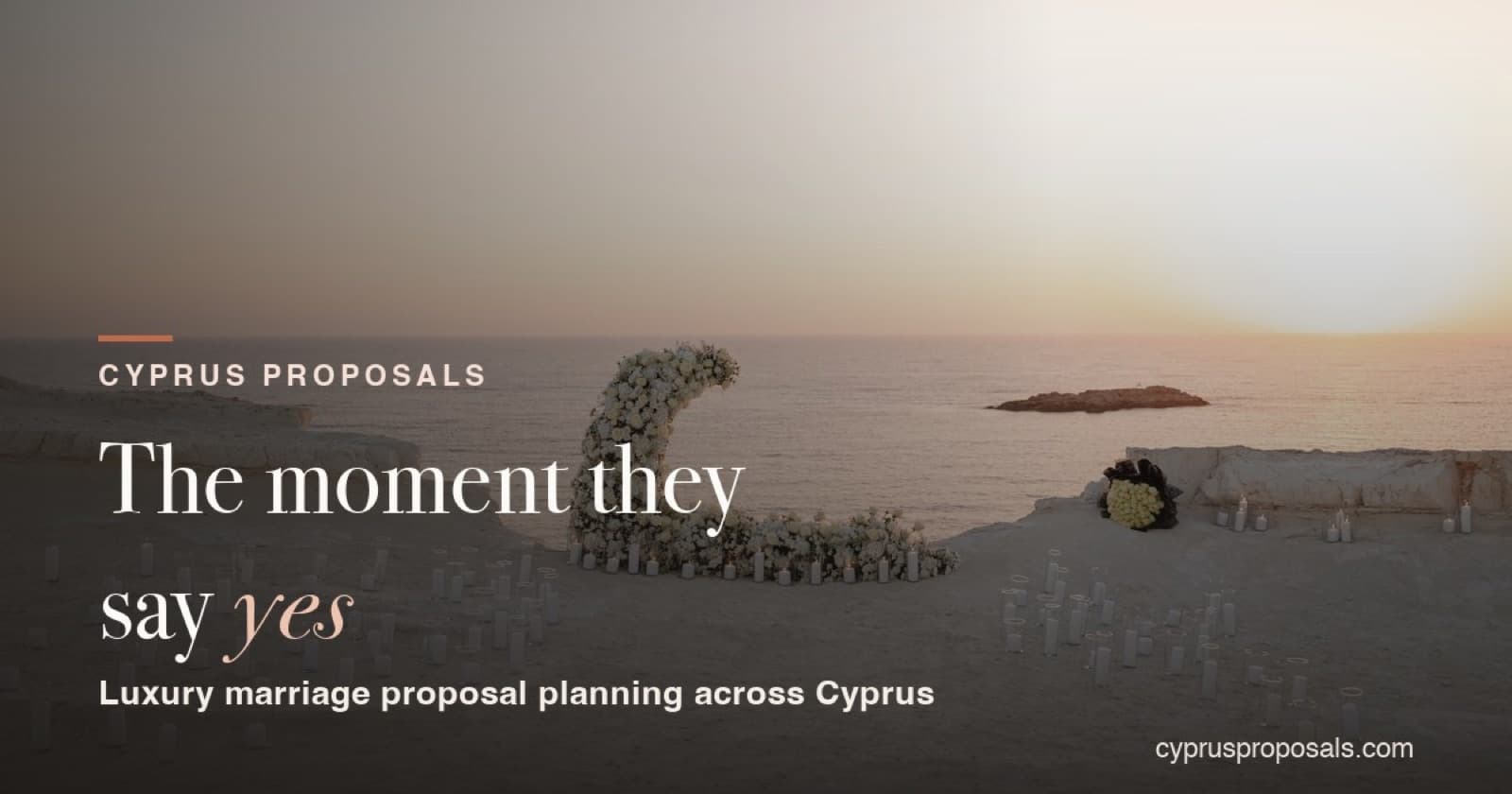
The brief
Someone planning a proposal is usually doing it once, in secret, often from another country, and to a deadline they cannot move. They do not want to browse — they want to see exactly what they will get, where it will happen and what it costs, and then hand it over. Vagueness anywhere in that chain loses the booking.
What we built
We built a site organised around the two things that decide a proposal: the setup and the location. Each package has its own page with what is included, and each signature location has its own page. Guides and an FAQ handle the logistics of arranging something secretly from abroad, and the whole site funnels toward a single enquiry.
What Each Part Does
A page per package
Nine distinct setups — from a two-person picnic to a yacht proposal — each with its own page rather than a row in a comparison table.
Signature locations
Dedicated pages for Aphrodite’s Rock, Cape Greco and Limassol Marina, matching how people search: by the place they have already imagined.
Planning guides
Content covering how to arrange a proposal in Cyprus from abroad and in secret — the practical anxiety behind the booking.
Photography as standard
The photographer presented as part of the offer rather than an upsell, since the images are most of what is being bought.
Finishing touches
The add-ons that personalise a setup, presented so they read as thoughtful rather than as an upsell ladder.
Single-intent funnel
Every route converges on one enquiry. There is exactly one thing to do on this site and the layout never competes with it.
Areas of work
- Web design
- Conversion-focused layout
- Package presentation
- Technical SEO
How it was built
- Each package page sets out what is included and what it costs in a form Google reads as a price list rather than as ordinary text — so someone comparing on budget is matched to the package that fits, and the price can show in the listing itself rather than only after a click.
- Every signature location page carries its town and map coordinates as data Google can place on a map, not only as words in a sentence — so a search for a proposal at Aphrodite’s Rock or Cape Greco can be matched to the page about that spot, and the person arrives already looking at the thing they had pictured.
- The planning guides are written as numbered steps and the FAQ as plain questions and answers — laid out that way for the reader, and marked up in the code behind the page so Google can read them the same way. Listings like that are sometimes shown expanded, which takes up more room on the results page and answers part of the question before anyone clicks.
- None of this makes a page rank on its own. It decides which searches a page is matched to, and what the listing can look like when Google chooses to show it — and that choice is Google's, not ours. Climbing the results for the competitive terms is a slower, separate job.
Want Something Like This?
Every project here started as a conversation about what the business actually needed. Yours can start the same way.